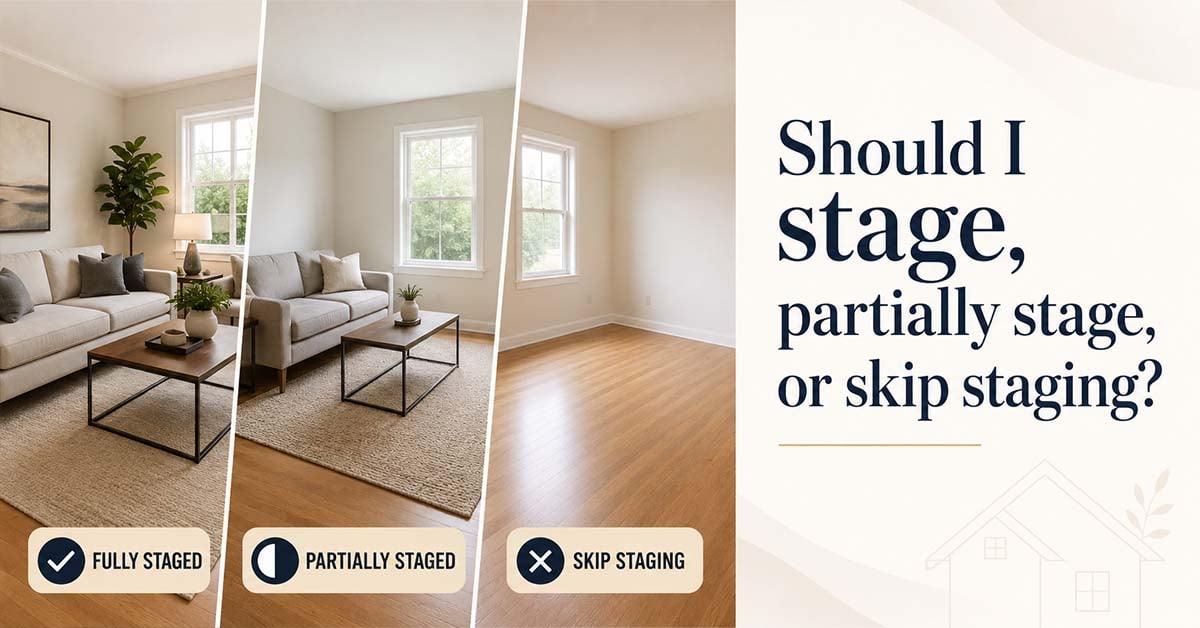
Should I Stage, Partially Stage or Skip Staging?
Local Guide Sankari Subburaman August 28, 2026
Local Guide Sankari Subburaman August 28, 2026
Selling a home involves more than deciding on a price and putting up a listing. How the property looks when buyers first see the photos, walk through the rooms, or attend an open house can shape their perception before they ever ask a question. As one of the Kirkland Real Estate Agents working with sellers, I look at staging as part of the larger selling strategy, not as a requirement that every homeowner needs to follow.
Some homes benefit from full staging. Others need only a few carefully chosen changes. And sometimes, the smartest decision is to skip staging and put the budget toward improvements that will have a greater impact. The right answer depends on the property, its condition, the competition and the type of buyer it is likely to attract.
In this blog, I will look at when full staging makes sense, when partial staging can be more practical and when skipping staging may be the better choice.
Staging is not about making a home look like a showroom. It is about helping buyers understand the space and picture themselves living there.
Furniture can show the scale of a room. A properly arranged living area can make the flow of the home easier to understand. Removing unnecessary pieces can make a smaller space feel more open. Even simple changes to lighting, accessories and furniture placement can influence how a room photographs.
That said, staging should work with the home rather than disguise it.
If a property already has attractive furniture, good natural light and a clean, organized appearance, completely restyling it may not be necessary. The objective is to present the home in its strongest possible condition without spending money simply because staging is considered standard practice.
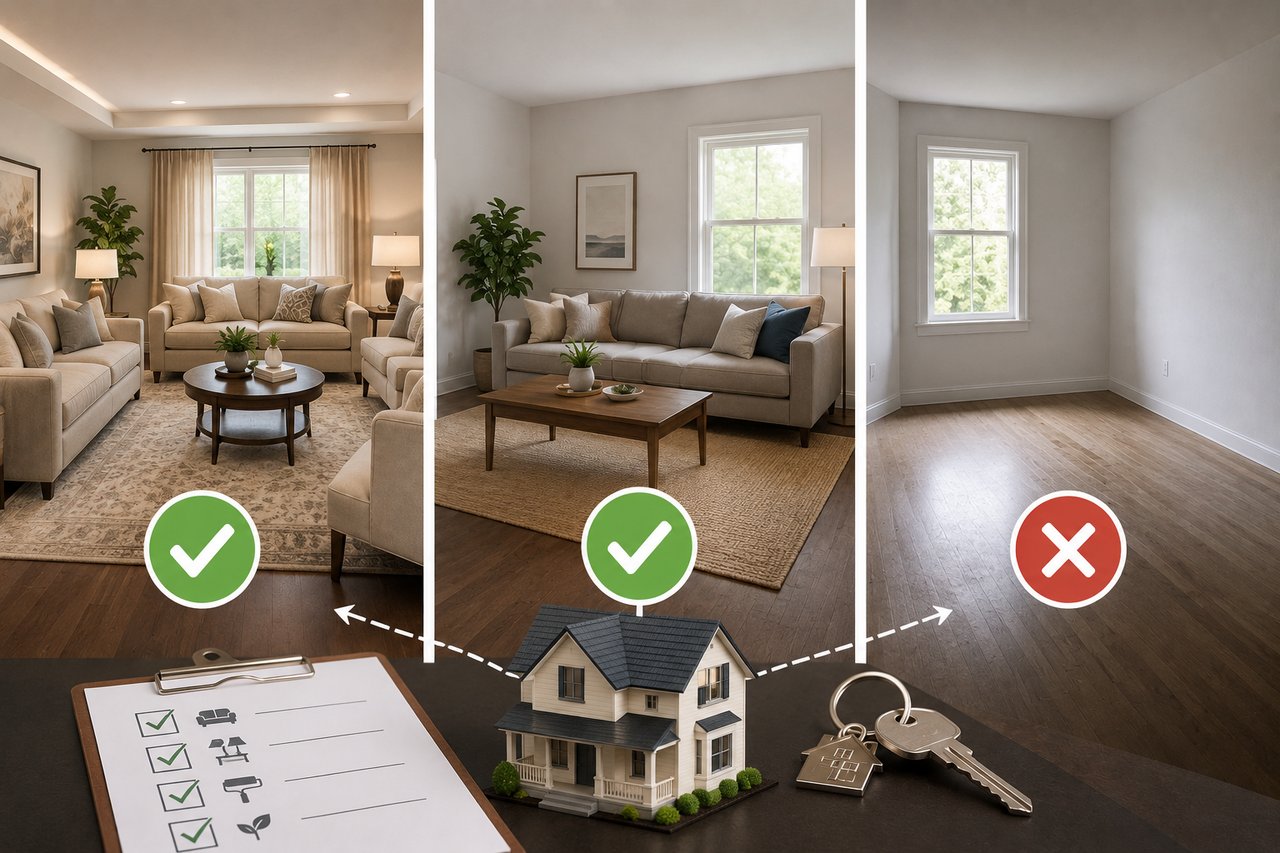
Full staging is worth considering when a property needs a significant visual change before going on the market.
This is especially relevant for vacant homes. Empty rooms can make it difficult for buyers to judge proportions, understand how much furniture will fit, or see how different areas could be used. A professionally furnished space gives those rooms context.
Full staging may also be appropriate when the existing furniture is dated, oversized, mismatched, or simply does not photograph well.
I would generally look at factors such as:
The decision should always come back to the property's needs. If full staging can significantly improve the presentation and help the home compete more effectively, the investment may be worthwhile.
Not every home needs to be completely transformed.
Partial staging can be a strong option when the property already has a solid foundation but certain rooms need attention. Instead of replacing furniture throughout the house, the focus can be placed on the spaces buyers are most likely to notice.
For example, a living room may need new furniture while the bedrooms are already presented well. A dining area may need a more intentional setup. An awkward room may benefit from furniture that demonstrates how the space can be used.
This approach can also be useful for occupied homes. Moving everything out of a house before selling is not always practical, especially when the seller is still living there. Selective changes can create a cleaner, more polished presentation without turning the process into a complete redesign.
I prefer this approach when it solves a specific presentation problem rather than adding unnecessary expense.
There are homes that simply do not need full staging.
If the property is well maintained, uncluttered, bright and furnished appropriately, the existing presentation may already be doing its job. In that situation, spending thousands of dollars on additional furniture may not provide enough value.
The same applies when the home has other priorities.
A seller may get more value from addressing visible maintenance issues, improving the landscaping, refreshing worn areas, or investing in professional photography. The right choice depends on what buyers are likely to notice first.
Skipping staging does not mean ignoring presentation.
Before listing, I would still want the home to be clean, organized, well lit and easy to photograph. Personal items that distract from the property should be minimized and furniture that makes rooms feel crowded should be reconsidered.
Sometimes, editing what is already there is all a home needs.
One of the easiest mistakes sellers can make is assuming that more staging automatically means a better listing.
It does not.
Staging should have a clear purpose. If a room already looks balanced and inviting, changing everything may actually make the property feel less natural. If the home's architecture is one of its strongest features, too much furniture can distract from it.
I also consider how the home fits into the current market. A seller should not spend heavily on staging without first understanding what competing properties are offering and what buyers are responding to.
The goal is not to create a magazine spread. The goal is to make the property appealing, understandable and memorable to the right buyer.
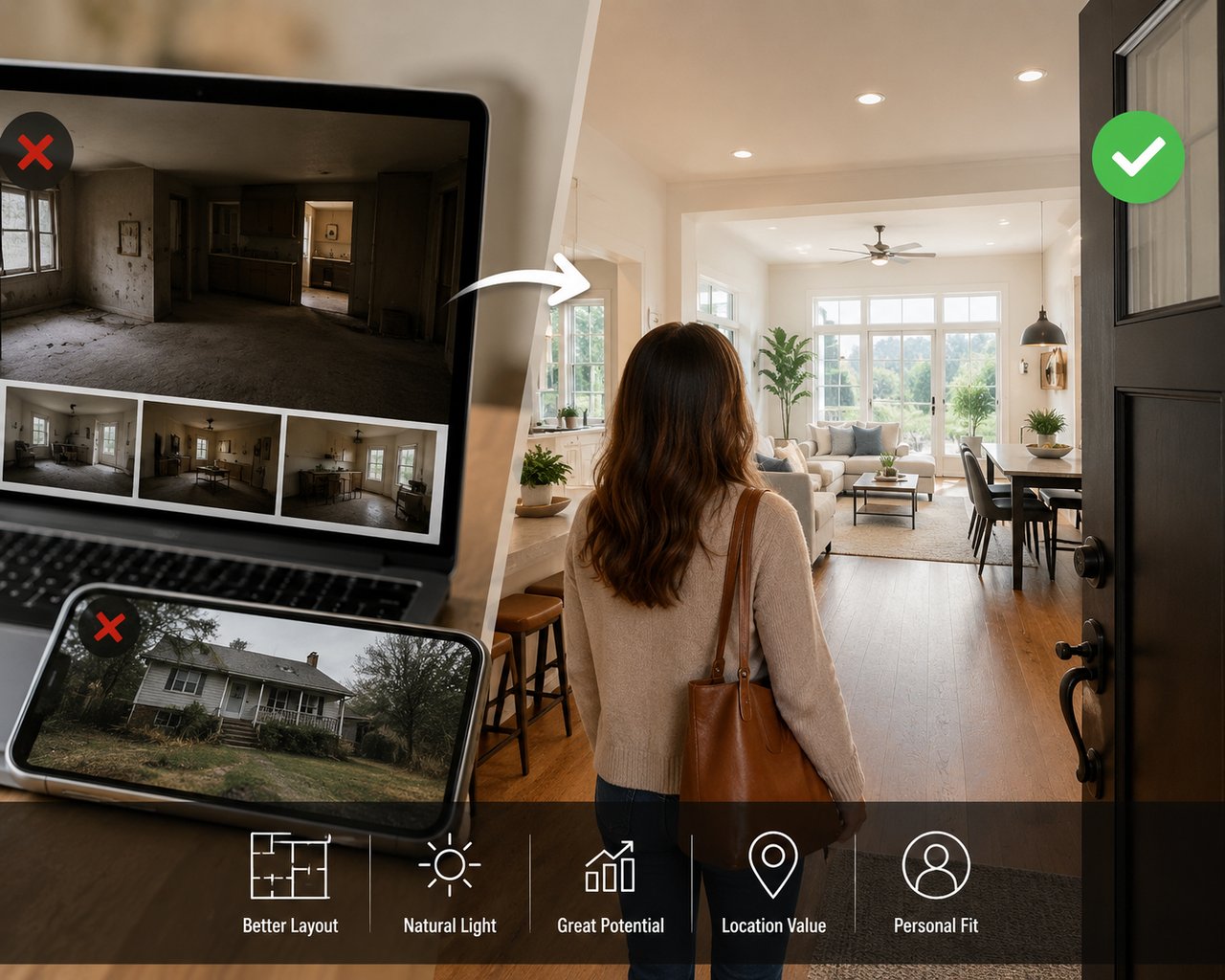
A home may look good in person but fail to make the same impression online.
That matters because buyers often encounter a property through listing photos before they ever schedule a showing. Staging should therefore be considered alongside photography rather than separately.
Furniture placement, clutter, lighting, wall decor and even the amount of empty space can affect how a room appears through a camera lens.
I pay attention to how the home will translate into photographs because the listing needs to make a strong first impression before a buyer steps through the front door.
A well-presented room should feel natural in person and photograph clearly from the angles that matter most.
Higher-priced homes can require a more considered approach, but that does not automatically mean full staging is necessary.
The property's architecture, finishes, views, outdoor spaces and existing design all matter. A beautifully furnished home may already have the right presentation. In another property, carefully selected furniture may help buyers appreciate the scale and function of the space.
For distinctive properties, staging should support the home's identity rather than make it look generic.
If the kitchen is a major selling point, the presentation should keep attention there. If the property has exceptional views, furniture placement should not interfere with them. If the home has an unusual layout, staging can help demonstrate how the rooms can be used.
Every decision should have a reason behind it.
I do not believe in recommending the same staging strategy to every seller.
Before making a recommendation, I look at the property as a buyer would. I consider the condition of the home, how it photographs, what already works, what needs improvement and how it compares with the competition.
From there, the options become much clearer.
A vacant property may need full staging. An occupied home may benefit from selective changes. A beautifully maintained property may need little more than decluttering and professional photography.
The important thing is to make the investment where it can actually improve the listing.
That approach also keeps the seller's broader goals in focus. Preparing a home for sale should not become an exercise in spending money on every possible improvement. It should be a strategic process designed to put the property in its strongest position.
So, should you stage, partially stage, or skip staging?
There is no universal answer.
Full staging can be valuable when a vacant or dated property needs a complete visual refresh. Partial staging can make sense when only a few rooms need help. Skipping staging may be perfectly reasonable when the home already presents well and the budget would be better spent elsewhere.
What matters most is understanding what your particular property needs before making the investment.
If you are preparing to sell, I can help you assess the home, identify the areas that deserve attention and determine whether staging should be part of the strategy. Whether you are working with experienced Bothell Realtors or preparing a property elsewhere, the best listing strategy starts with the home itself, not a one-size-fits-all checklist.
Stay up to date on the latest real estate trends.
Local Guide

Local Guide
Local Guide

Local Guide

Local Guide

Local Guide

Local Guide

Local Guide