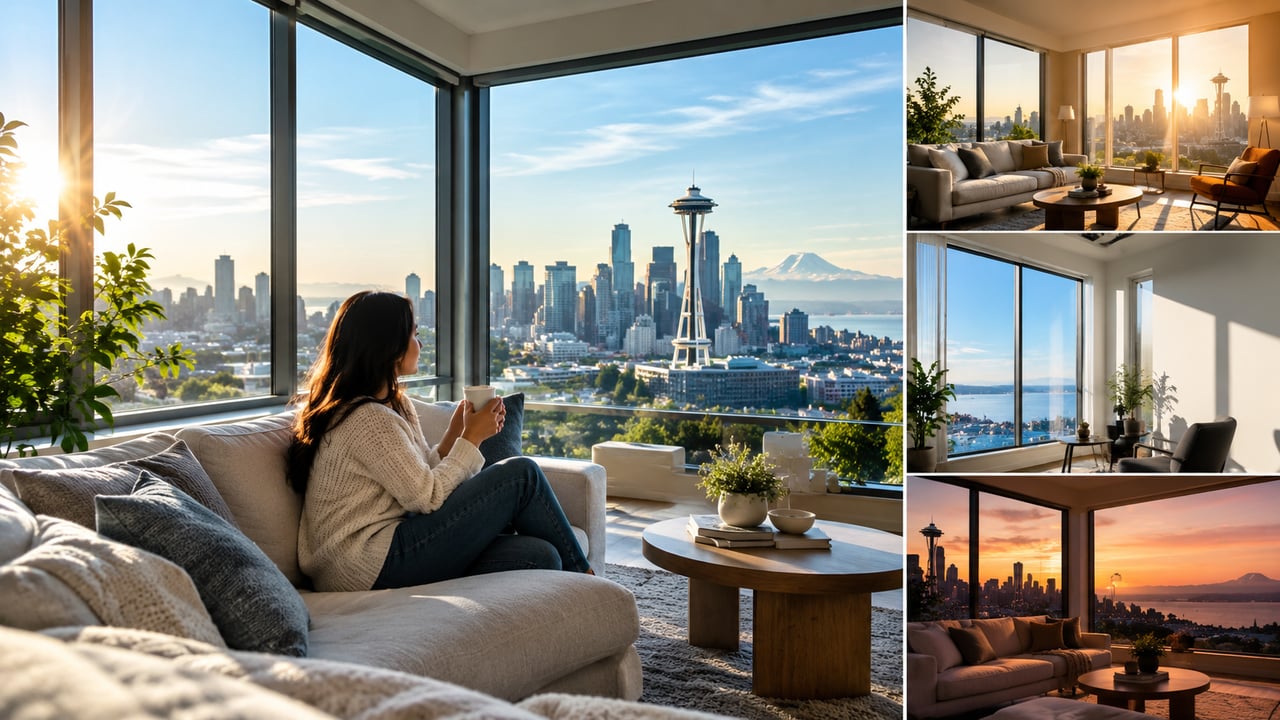
In Seattle, Natural Light Is Not Just About Direction-Facing
Local Guide Sankari Subburaman October 16, 2026
Local Guide Sankari Subburaman October 16, 2026
A buyer tours a south-facing condo on a sunny July afternoon, sees light pouring across the floors and makes an offer that evening. By November, the same living room is dim by two o’clock, a tall evergreen next door blocks what little sun there is, and the lamps stay on all day. The listing said south-facing, and that was true. It just wasn’t the whole story. In Seattle, natural light depends on the season, the sky, the surrounding trees and buildings, the slope of the land, the windows and even the floor you live on.
This guide explains how to judge light properly, from how the sun behaves here to what to check at a showing, and how a local realtor in Seattle can help you read a home beyond its compass direction.
Real estate listings love compass directions because they are simple. South-facing is often treated as the best, with east, west and north following. In many cities, that ranking holds up well. In Seattle, it only tells part of the story.
The city sits far north, so the sun stays low in the sky for much of the year. In midsummer, daylight stretches past nine in the evening. In midwinter, the sun rises late, hangs low and sets before many people finish work. A home that glows in June can feel gloomy in December, and the direction on the listing says nothing about that swing.
Add frequent cloud cover from autumn through spring, and the direction of a window matters less than how much open sky it can actually see.
The weather shapes light as much as geometry does. From October to April, overcast days are common, and the light becomes soft and diffuse rather than direct. Even in early summer, a marine layer can hold the morning gray before the sun breaks through.
That changes what buyers should value. On cloudy days, there are no sharp beams to enjoy, so the amount of visible sky through the window becomes the main source of brightness. Large windows, higher ceilings and light interior colours all help a home use whatever daylight arrives.
It also means a single showing can mislead. A bright summer visit may hide a dark winter reality, and a rainy winter visit may make a good home look worse than it is. Visiting at different times of day, and asking about the seasons, gives a fairer picture.
Seattle is a green city, and that is part of its charm. It also means the view from a window often includes tall evergreens, which cast shade all year, unlike deciduous trees that let winter light through.
Evergreens: Douglas firs and cedars can block low winter sun completely, especially on the south and west sides
Deciduous trees: Maples and alders shade in summer but let light in once the leaves drop
Hills and slopes: A home on the north side of a hill may lose direct sun for months, while one on a south-facing slope gains it
Neighbouring buildings: New construction next door can change a home’s light dramatically, and zoning rules may allow taller buildings than currently stand
Retaining walls and fences: At lower levels, these can reduce light more than buyers expect
Walk around the property and look up. Note what stands in the sun’s path, and consider whether the trees belong to you or a neighbour, since that affects whether they can be trimmed.
Seattle’s lakes, Puget Sound and Lake Washington add something many cities lack. Light reflects off water and brings a bright, shimmering quality into homes with water views, even when the sun is not shining directly into the room.
Homes facing the water often benefit from open sky over the surface, because there are no buildings or trees to block the horizon. That can make a west-facing view of the Sound especially bright in the afternoon and evening. At the same time, glare can be a problem. Low sun reflecting off water can make a room uncomfortably bright at certain hours, so window coverings and glass quality matter.
When a home is near the water, ask what the light does in the early morning and late afternoon, and not only at midday.
Two homes with the same orientation can feel completely different because of how the space is built. Window size and number play a big part, since larger, taller windows pull in more sky, and multiple windows on different walls balance light through the day. Clean, high-quality glazing lets in more light than older, tinted or dirty panes, and higher ceilings let light travel deeper into a room.
Open layouts with fewer interior walls allow light to reach the back of the home, while skylights and light tubes help hallways, bathrooms and rooms with limited exterior wall. Interior colours and finishes matter too, because pale walls, light flooring and reflective surfaces bounce light around, while dark colours absorb it.
A well-designed layout can make a modest window feel generous. A poor one can waste a lot of potential, with a bright living room at the front and a dark kitchen at the back.
Where a unit sits in a building can matter more than the direction on the listing.
Higher floors usually see more sky and clear nearby trees and rooftops, which helps in a cloudy climate. Ground-floor and garden-level units often have windows partly below the surrounding grade, so they can feel darker, though they may offer other benefits such as outdoor space.
Corner units with windows on two sides get light from different angles through the day, and often feel brighter than middle units with a single exposure. In townhomes, check which rooms have windows, as shared walls can limit light on certain sides. For condos, look at the window placement relative to nearby towers, since a view of another building’s wall is not the same as a view of the sky.
A few simple steps tell you more than the listing can.
Visit at least twice, once in the morning and once in the late afternoon, and if possible, once on a cloudy day
Turn off all the lights during the showing, and see how each room feels
Use a compass app to confirm which way each window faces, and note what is outside
Look up the sun path for winter and summer, using free online tools
Check photographs taken at different times of year, and ask the seller or neighbours about winter light
Notice how much you rely on lamps, and whether the rooms you will use most, such as the kitchen and home office, get enough light
Consider the cost of changes, such as larger windows, trimming trees or adding lighting
These checks take little time, and they can prevent the surprise of a dark winter.
Sankari Realty works with buyers and sellers across the Seattle area, with attention to the details that listings tend to skip. Its agents help clients compare homes in person, ask the right questions about surroundings and plan showings at times that reveal how a property really lives.
Light is one of those details that photos flatter and descriptions oversimplify. A local agent who knows the neighbourhoods, the typical tree cover and the way new construction is changing the streets can point out what to look for and what to ask. That knowledge is especially useful when you are comparing several homes that look similar on paper.
A good home for light is one that works across the seasons, in the weather you will actually live with. Direction is one clue, and it should sit alongside sky, trees, slopes, water, windows and floor level. Bring those into your search, and you are far less likely to be caught out by a gloomy November. If your search extends across Lake Washington, a real estate agent in Kirkland can help you apply the same careful eye to homes on the Eastside.
Stay up to date on the latest real estate trends.

Local Guide

Local Guide

Local Guide

Local Guide

Local Guide

Local Guide
Local Guide

Local Guide

Local Guide