Best Real Estate Investment Strategies for 2026
January 31, 2026
January 31, 2026
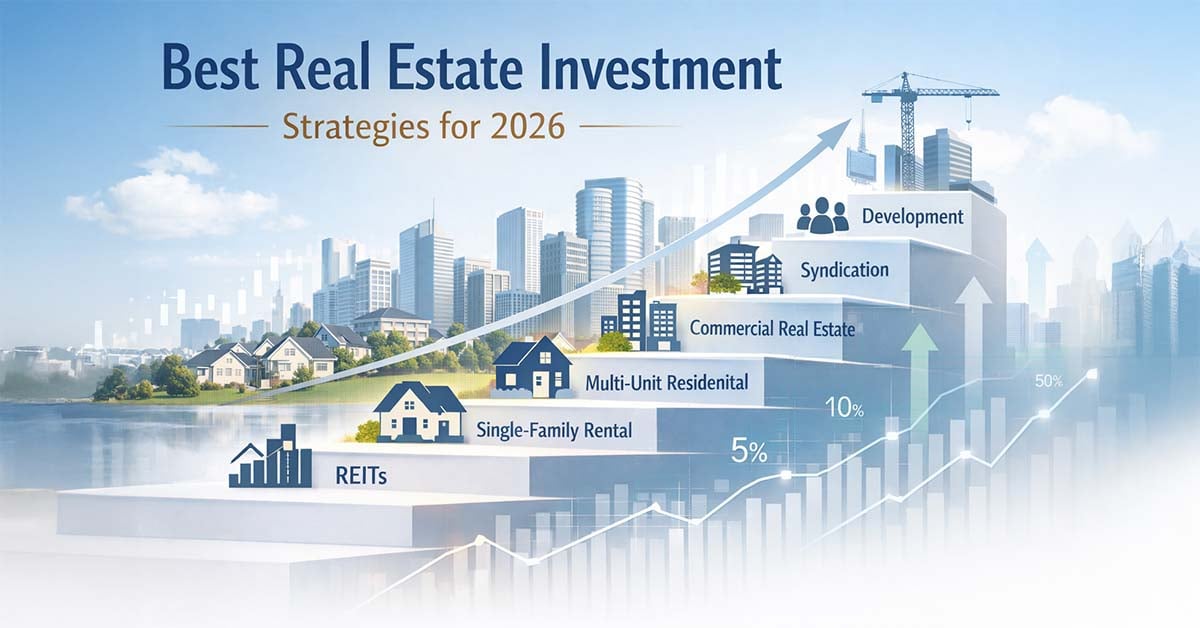
Real estate investing in 2026 looks very different from what it did a few years ago. Market cycles have tightened, buyer expectations have matured, and capital has become more intentional. As a Realtor in Seattle, I have seen firsthand how investors succeed when they stop chasing trends and start choosing strategies that actually fit their risk tolerance, capital, and lifestyle. There is no universal formula that works for everyone. The smartest investors I work with focus on alignment, not hype.
In this blog, I will walk through how I think about real estate investment strategies for 2026 using a ladder-based framework shaped by years of hands-on investing and advisory experience.
I think of real estate investing as a ladder because it reflects how different strategies demand different levels of commitment. Not everyone needs to climb every rung. Some investors are comfortable staying near the bottom, prioritizing stability and liquidity. Others intentionally move higher, accepting complexity in exchange for control and upside.
What matters most is understanding four fundamentals before choosing a strategy:
Risk tolerance
Available capital
Holding period
How involved you want to be day to day
Everything else, including tax strategy and portfolio mix, comes after.
REITs continue to appeal to investors who want real estate exposure without operational involvement. I often see professionals and first-time investors use them as an entry point because they are liquid and accessible.
This approach works well if the goal is diversification with minimal effort. That said, REITs behave more like equities than physical property. You gain exposure, but not control. For investors looking to actively shape outcomes in 2026, REITs are rarely the end goal.
Owning a single rental property is often where investing starts to feel real. You control the asset. You decide how it is financed, managed, and improved. I have worked with many buyers in suburbs like Bothell and Redmond who choose this route because it balances leverage with familiarity.
The challenge is concentration. One vacancy impacts everything. In today’s environment, that risk needs to be intentional, not accidental.
This strategy makes sense when:
Cash flow stability matters
You want direct ownership
You are prepared for moderate involvement
Multi-unit residential investing changes the math. Risk spreads across tenants, operations become more efficient, and income stabilizes. I often discuss this option with investors eyeing Sammamish and surrounding areas where demand fundamentals remain strong.
However, scaling introduces complexity. Financing, management, and long-term planning require stronger systems. In 2026, this rung favors investors who are ready to think beyond individual properties and treat real estate like a business.
Commercial real estate demands a different mindset. Lease structures are longer. Underwriting is deeper. Market cycles matter more. I have seen investors succeed here when they understand the asset class and remain patient during slower periods.
Commercial assets reward discipline, not speculation. When done right, they offer predictable income and long-term value creation. When rushed, they magnify mistakes.
For investors who want scale without operations, limited partner syndications have become increasingly popular. This strategy allows access to larger projects while remaining hands-off.
From my experience advising clients, success here depends almost entirely on sponsor quality and deal structure. It is passive, but not casual. Capital is locked in, and trust matters.
This approach fits investors who:
Want real estate exposure without management
Can commit capital long-term
Prioritize steady participation over control
General partnership is not just investing. It is operating. Raising capital, sourcing deals, managing execution, and protecting investor trust all sit on the table.
I have watched experienced investors transition into this rung only after mastering earlier steps. In 2026, this strategy rewards those with systems, reputation, and risk tolerance. It also demands accountability at every level.
Development sits at the top of the ladder for a reason. It combines entitlement risk, construction timelines, financing pressure, and market timing. The upside can be significant, but so is the exposure.
This path is not about speed. It is about precision. Investors who succeed here do so because they understand every variable and plan for uncertainty.
Strategy only works when paired with market knowledge. When I advise clients in Kirkland, I draw from years of transaction data, investor behavior, and firsthand observations. As a real estate agent Kirkland WA, I see how zoning, demand patterns, and buyer expectations directly influence which rung of the ladder makes sense in this market.
What works in Kirkland may not work the same way in Bothell or Sammamish. Context matters.
The best real estate investment strategy for 2026 is not the most aggressive or the most talked about. It is the one that fits your capital, your patience, and your willingness to be involved.
At Sankari Realty, I approach every conversation with that perspective. Strategy comes before structure. Fit comes before growth. If you start there, the ladder becomes a tool, not a pressure point.
If you are evaluating your next move in Kirkland, Bothell, Redmond, or Sammamish, the right strategy begins with an honest assessment and a clear plan forward.
Stay up to date on the latest real estate trends.


Local Guide

Local Guide
Local Guide

Local Guide

Local Guide

Local Guide

Local Guide
Local Guide