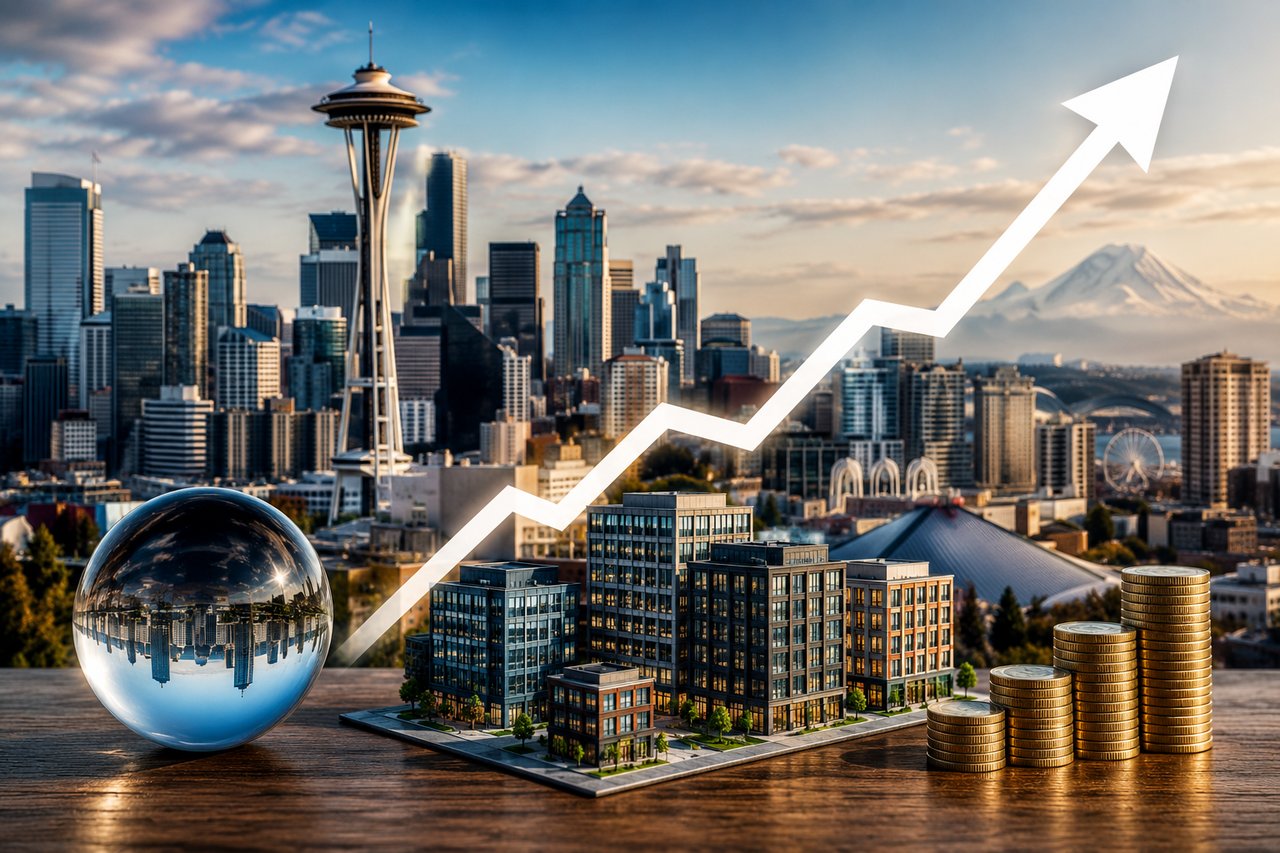
Seattle Commercial Real Estate Market Trends Investors Should Know!
Sankari Subburaman August 8, 2026
Sankari Subburaman August 8, 2026
The commercial real estate market continues to evolve as economic conditions, business priorities and buyer expectations change. At Sankari Realty, I believe successful investing starts with understanding market direction instead of reacting to headlines. Every investment decision should be backed by local knowledge, careful analysis and long-term planning. While many investors focus only on pricing, the strongest opportunities often come from recognizing market shifts before they become obvious.
As someone who works closely with buyers and sellers throughout Seattle, I also understand how surrounding communities influence investment decisions. Many clients searching for Bothell Realtors also want insights into the broader commercial market because regional growth often creates new investment opportunities.
In this blog, I will look at the commercial real estate trends investors should watch and how they can shape smarter investment decisions.
Commercial property performance is no longer determined only by square footage or building age. Businesses are placing greater importance on accessibility, surrounding amenities, transportation and employee convenience. This shift has made location quality a defining factor in long-term property value.
I have seen investors pay closer attention to neighborhoods with steady population growth, infrastructure improvements and expanding business activity. These factors often provide stronger stability than short-term market movements.
Rather than chasing every available listing, experienced investors are focusing on properties that align with changing business needs and future demand.
One trend that continues to stand out is the growing interest in mixed-use commercial developments. Properties that combine office, retail, dining or residential components often create stronger long-term appeal because they serve multiple market segments.
Several factors are contributing to this trend:
Businesses benefit from increased customer activity.
Property owners diversify income sources.
Communities support developments that encourage walkability and convenience.
Investors reduce reliance on a single tenant category.
While every property requires individual evaluation, mixed-use assets have become an important consideration for investors seeking balanced growth.
The office market has changed significantly over the past several years, but that does not mean office investments have lost value. Instead, tenant expectations have shifted.
Companies increasingly look for flexible layouts, collaborative workspaces, improved technology and modern amenities. Buildings that adapt to these expectations generally remain more competitive than those relying on outdated designs.
From my experience, investors who evaluate renovation potential alongside purchase price often uncover opportunities that others overlook. A well-positioned property with modernization potential can outperform a newer building purchased at a much higher cost.
Industrial real estate remains an important part of the commercial investment landscape. Distribution centers, logistics facilities, manufacturing spaces and warehouse properties continue benefiting from supply chain adjustments and expanding business operations.
Several characteristics make industrial assets attractive:
Consistent business demand across multiple industries.
Longer lease terms compared to many retail properties.
Growing need for efficient distribution facilities.
Opportunities created by regional economic expansion.
Investors who understand tenant requirements before purchasing often position themselves for stronger long-term performance.
Retail commercial real estate is adapting instead of declining. Businesses that provide services, entertainment, healthcare, fitness and dining continue attracting steady customer traffic because they offer experiences that cannot easily be replaced online.
I encourage investors to evaluate tenant mix instead of assuming every retail property performs the same. A shopping center supported by complementary businesses often creates stronger occupancy and customer engagement than properties relying on a single retail category.
Understanding local consumer behavior plays an important role in identifying retail investments with lasting value.
Financing conditions remain one of the most closely watched market factors. Changes in borrowing costs affect purchasing power, investor confidence and overall transaction activity.
Rather than allowing interest rate fluctuations to drive every decision, I focus on evaluating each property's long-term income potential. Investors who understand projected cash flow, operating expenses, tenant quality and future appreciation often make better decisions regardless of temporary financing conditions.
Patience can become a competitive advantage during periods of market adjustment.
Commercial real estate data tells part of the story. Local experience fills in the rest.
Every neighborhood develops differently, and subtle market changes often appear long before they become visible in larger reports. Through ongoing conversations with buyers, sellers and property owners, I gain insights that help identify opportunities and recognize potential risks earlier.
Whether an investor is comparing commercial opportunities near Redmond or evaluating properties connected to nearby business districts, understanding local conditions provides valuable perspective beyond market statistics.
Short-term market fluctuations naturally create uncertainty, but many experienced investors continue focusing on long-term fundamentals. Strong population growth, expanding industries, business development and infrastructure investments often have a greater influence on commercial property values than temporary market cycles.
I encourage clients to evaluate investments with realistic expectations rather than searching for immediate returns. Commercial real estate has historically rewarded thoughtful planning, disciplined analysis and strategic decision-making.
Markets will continue changing. Well-informed investors adapt with them instead of reacting emotionally.
Commercial real estate continues to present opportunities for investors who understand market trends, evaluate properties carefully and make decisions based on long-term value instead of short-term noise. At Sankari Realty, I believe every investment deserves a strategy built around current market conditions, future growth potential and individual financial goals.
If you are considering your next commercial real estate investment or need guidance from an experienced Real Estate Agent Kirkland WA, I am here to provide local insight, practical advice and personalized support that helps you invest with greater confidence. Whether your interests extend toward opportunities connected to Kirkland or other surrounding markets, informed decisions always begin with trusted local expertise.
Stay up to date on the latest real estate trends.
Local Guide